
The short answer
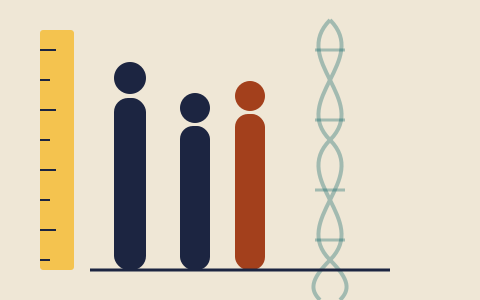
Most of the difference in height between one person and another comes from the genes they inherited. The genetics section of MedlinePlus, run by the U.S. National Library of Medicine, puts the share at about 80 percent. The rest comes from the conditions a person grows up in: how well they were nourished before birth and in childhood, whether they were often ill, and whether they had access to health care.
That split matters for anyone searching for a way to grow taller faster. The large genetic share is fixed at conception. The smaller environmental share is mostly about avoiding things that hold growth back, such as poor nutrition or untreated illness, during the years when a child is still growing. Neither part offers a lever that a healthy person can pull to add height beyond what their body was going to reach anyway.
Genes: most of the story
Height is not controlled by a single "height gene". MedlinePlus Genetics explains that, for most people, height depends on a large number of common genetic variants, each with a modest effect. More than 700 of them have been found so far, and researchers expect to find many more. This pattern, where many genes each contribute a little, is called polygenic inheritance.
Some of these variants sit in genes that affect cartilage in the growth plates. Growth plates are the zones near the ends of the long bones in the arms and legs where new bone is made while a child grows, and they are the reason bones get longer. The job of many other height-linked genes is still unknown.
A few rare variants have a dramatic effect on their own. MedlinePlus Genetics gives the example of changes in the FGFR3 gene, which cause achondroplasia, a rare condition marked by short stature. It also lists other genes linked to rare growth conditions, including one involved in isolated growth hormone deficiency. These conditions are uncommon, and they are medical diagnoses, not variations that any routine can work around.
Because each parent passes on a different mix of variants, children usually end up roughly as tall as their parents, while brothers and sisters can still differ noticeably from one another. That is ordinary genetics, not a sign that one child has done something right or wrong.
Nutrition, health and circumstances
The environmental share starts before birth. MedlinePlus Genetics lists a mother's nutrition during pregnancy, whether she smoked, and her exposure to hazardous substances as influences on a child's eventual height. After birth, it says that a well-nourished, healthy and active child is likely to grow into a taller adult than a child with a poor diet, infectious diseases or inadequate health care. Income, education and occupation also show up as influences, largely because they shape those same factors.
One of the clearest signs that environment matters comes from studies of families who move. MedlinePlus Genetics notes that moving to a country with better access to nutritious food, health care and work can make a substantial difference to the height of the next generation. That suggests some height differences between groups of people are not genetic at all, but reflect how well children were fed and cared for.
Nutrition works mainly in one direction: too little holds growth back. MedlinePlus describes malnutrition as including undernutrition, overnutrition and an imbalance of nutrients. In children, one form is faltering weight, where a child does not gain weight or grow as expected. Specific deficiencies cause specific problems; too little vitamin D, for example, can cause rickets, a bone disease. MedlinePlus advises talking to a health care provider if you are worried about a child's growth.
What the sources do not say is that eating more than a balanced diet, or eating particular "growth foods", will make a well-fed child taller than their genes allow. The evidence is about removing a handicap, not adding a bonus. The guide to sleep, food and activity covers this in more detail.
In one line
Genes set the range. Good nutrition and health care during childhood help a child reach the top of their own range; their absence can keep a child below it.
Hormones, and growth hormone in particular
Hormones are the body's chemical messengers, and several of them take part in growth. The best known is growth hormone, made by the pituitary gland, a small organ at the base of the brain. MedlinePlus explains that in children growth hormone plays a major role in bone growth, muscle development and height.
Too little growth hormone can leave a child growing slowly and much shorter than other children of the same age and sex. Too much is also possible, usually because of a non-cancerous tumour of the pituitary gland; in children it can cause gigantism, and in adults it causes acromegaly, in which the hands, feet and face grow larger. Both are medical conditions diagnosed with specific tests and treated by specialists.
MedlinePlus notes that growth hormone levels in the blood rise and fall through the day, so a single ordinary blood test says little. Doctors use more involved tests instead, covered in the guide on when to talk to a doctor. Whether a child should receive growth hormone treatment is a medical decision for specialists, made after diagnosis. It is not something to pursue on your own, and this site does not give treatment advice.
Where sleep fits
Sleep comes up often in advice about growing taller, and there is a real basis for it. MedlinePlus describes how certain phases of sleep release growth hormone, which helps children grow, and how not getting enough sleep can lower the levels of hormones that help children grow. Sleep is part of the normal machinery of childhood growth.
That is different from saying extra sleep makes a child taller than they would otherwise be. None of the sources reviewed for this site makes that claim. The sensible reading is that enough sleep supports normal growth, in the same way enough food does, and that chronic lack of sleep is one of several things that can work against it.
Why nobody can predict height exactly
Because so many variants are involved, MedlinePlus Genetics says it is difficult to predict accurately how tall a child will be. Doctors use growth charts as one part of a wider clinical assessment to judge whether a child is growing as expected, but a confident adult-height figure for a particular child is not something the science can promise.
That uncertainty is worth remembering when a website or app offers to "calculate" a child's final height or promises a specific number of extra centimetres. The genetics are not understood well enough for that kind of precision, and nothing in the authoritative sources supports a guaranteed gain.
Example (invented for illustration)
Two siblings grow up in the same home, eat the same meals and keep the same bedtimes. By their late teens one is noticeably taller than the other. The difference comes mainly from the different combination of gene variants each inherited, not from anything one of them did. Neither could have closed the gap with a routine or a product.
What this means in practice
- For adults: your height was mostly set by your genes and by the conditions you grew up in. Once growth has finished, those influences have done their work. The guide on how growth works explains why.
- For parents: a varied diet, enough sleep, regular activity and routine health care give a child the conditions to reach their own potential. They are worth doing for their own sake, not as a height programme.
- For anyone worried: a child who is much shorter than others of the same age and sex, or who seems to have slowed down or stopped growing, should be seen by a doctor. Many short children are simply following their family pattern, but some have conditions that can be treated, and MedlinePlus notes that early diagnosis can make a difference.